
A new take on Jack the Ripper
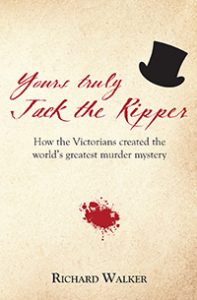 True crime tour guide Richard Walker has given the talks and walked the walks – and this unique intimacy with the streets of Victorian London has given him new insight into the real story behind the sensationalist story of the world’s most famous serial killer. His new book Yours Truly Jack the Ripper, out now (from which the article below is an extract), offers a fresh perspective based on careful examination of the evidence and a deep understanding of the times the crimes occurred in. You can exclusively order the book for 25% off here using the coupon DYA25 in the checkout (offer ends 30 April).
Contrary to popular belief about the violent nature of Whitechapel’s slums, murder appears to have been remarkably rare. Bruce Paley, in Jack the Ripper: The Simple Truth (1995), writes:
Although there could be no denying that the East End, and Whitechapel especially, had a well-deserved reputation for being a violent, dangerous and unsavoury place, murder itself was actually a surprisingly rare occurrence. In fact, in 1887, the year before the Ripper murders, out of eighty recorded homicides in London, not a single one took place in Whitechapel…
Nor were that year’s statistics a fluke. There hadn’t been any murders in Whitechapel in 1886 either, out of sixty-eight committed in London, while the reports for 1889 and 1890 each show one murder per year in the district, out of totals of seventy-nine and seventy-four respectively for all of London.”
No doubt some murders could have been missed. But what is clear is that while the papers certainly covered the events surrounding the 1887 murder of Miriam Angel by Israel Lobulsk (Lipski), south of Whitechapel in St George’s in the East, in some detail, the press coverage of the murders of 1888 was on an altogether different scale.
A dull year desperate for news
When The Star launched into London’s crowded newspaper market on Tuesday, 17 January 1888, its owners faced a significant challenge; they entered a competitive market. The competition from established newspapers wasn’t the only threat to The Star’s continued survival. They were entering the marketplace at the very beginning of what was to be a very dull year.

As Paul Begg notes in Jack the Ripper: The Facts (2004):
Eighteen eighty-eight was a very dull year. Most history books don’t mention it at all or mention it in passing. There was no cause for anxiety abroad.
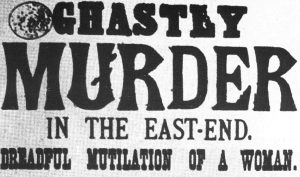
This news drought created the perfect conditions for sensational journalism. By autumn 1888, The Pall Mall Gazette and The Star had become pioneers of what would soon be called ‘new journalism’. The belief that ‘if it bleeds it leads’ certainly applied to their editorial ethos.
In Jack the Ripper: The Forgotten Victims (2013), Begg explains:
They helped to inflate the Whitechapel murders into an often extravagant narrative of shock and horror … For the “new journalism”, the Whitechapel horrors were as much to do with politics and increasing sales as with crime.
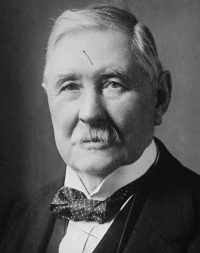
Contemporary observer George R. Sims captured this dynamic perfectly. On Sunday, 9 September 1888, he noted that the Whitechapel murders had ‘come to the relief of newspaper editors in search of a sensation’. A week later, he observed: ‘There isn’t much to talk about – We live in dullish times; The only things the newsboys shout are these Whitechapel crimes.’
Just five weeks after The Star’s debut, the violence began. Annie Millwood, 38 and homeless, was stabbed multiple times in Spitalfields on Saturday, 25 February 1888. She died five weeks later from her injuries. Three days after Annie’s death, Emma Elizabeth Smith, 45, also homeless, was attacked minutes from where Millwood had been assaulted. A blunt instrument had been thrust inside her, causing fatal peritonitis. On Tuesday, 7 August, Martha Tabram, 39 and homeless, was discovered on a building’s first-floor landing – again, just minutes from the previous attacks. She had been stabbed 39 times.
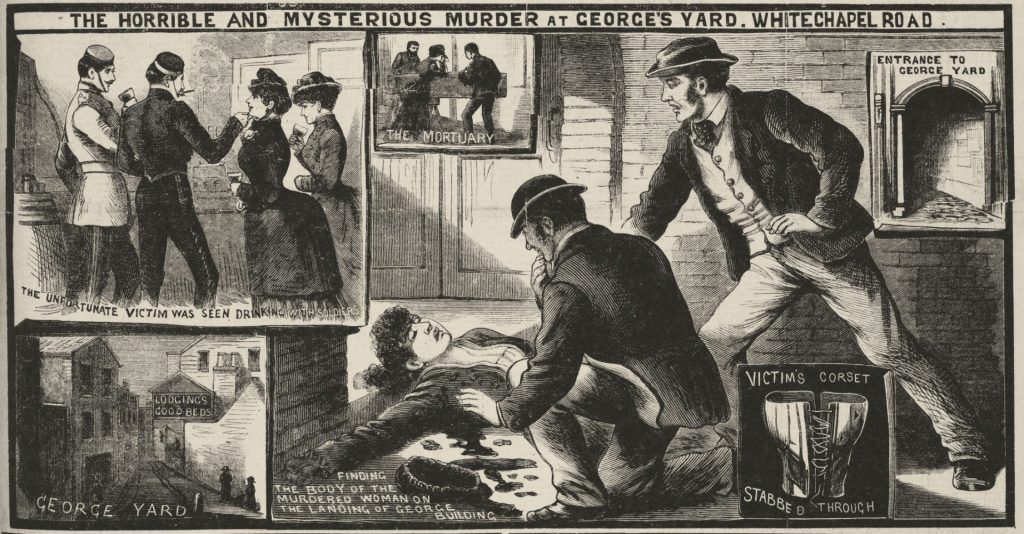
These brutal attacks, all committed on Whitechapel’s streets in the early hours, perfectly suited The Star’s sensational editorial approach. The fact that Whitechapel had experienced no murders for two years made these killings even more dramatic. With each new death, The Star grew more skilful at exploiting the horror, and by the year’s end – largely thanks to coverage of these victims – it boasted the largest evening newspaper circulation in the country.
The Star and its competitors didn’t hesitate to attack police incompetence, maintaining relentless pressure on investigators. But this raises uncomfortable questions: How much more intense would that pressure have been if these victims were daughters of dukes or wealthy merchants? Does pressure diminish when victims are labelled prostitutes? Could that label have been adopted early by police for convenience rather than evidence?
The murders were real, the suffering genuine. But the legend that grew around them may tell us more about Victorian media and society than about any single perpetrator stalking the streets of Whitechapel.
The imperial mindset: how Victorian class prejudice shaped the Ripper investigation
Assistant Commissioner Sir Robert Anderson dismissed the victims as belonging to ‘a very small class of degraded women who frequent the East End streets after midnight, in hope of inveigling belated drunkards, or men as degraded as themselves’.
If this was the attitude of a civilised, well-educated senior police officer, what could we expect from the average working man of that era?
Anderson’s prejudices weren’t personal failings – they were products of imperial ideology. Anderson and his class shared a world view shaped by the conviction that they possessed a divine right to rule both the wider empire and its centre.
This mindset was perfectly captured by Cecil Rhodes, who declared:
I contend that we are the first race in the world, and that the more of the world we inhabit the better it is for the human race… Remember that you are an Englishman and have consequently won the first prize in the lottery of life … It is our duty to seize every opportunity of acquiring more territory … more territory simply means more of the Anglo-Saxon race more of the best the most human, most honourable race the world possesses.
This imperial world view didn’t only justify overseas conquest – it shaped domestic attitudes towards society’s most vulnerable members. The same ideology that allowed ‘civilised’ men to use extreme violence to take what they wanted from colonised peoples also determined how they viewed the slumdwellers who lived a five-minute walk away.
These women lived at the heart of the British Empire, yet in the minds of men like Anderson, they could never be seen as members of what they considered ‘the first race in the world, winners of the first prize in life’s lottery’.
The empire’s violence was enabled by technology and greed. As Hilaire Belloc observed: ‘Whatever happens, we have got / The Maxim gun, and they have not.’
Meanwhile, as George Bernard Shaw noted, the imperial system maintained enough of its population in poverty to ensure ‘a ready supply of recruits’ – men who were ‘ostensibly heroic and patriotic defenders’ but really ‘unfortunate men driven by destitution to offer themselves as food for powder for the sake of regular rations, shelter, and clothing’.
This world view created a crucial blind spot in the investigation. Anderson and his colleagues operated from the conviction that they belonged to a fundamentally different species from the victims. This prejudice inevitably shaped how they interpreted evidence and pursued leads.
Importantly, Anderson had never actually met these women. There was no solid evidence they spent their nights ‘inveigling belated drunkards’.
Even modern writers struggle to escape these prejudices. Philip Sugden describes the second Ripper victim in The Complete History of Jack the Ripper as ‘Annie Chapman, alias Annie Siffey. A sad, broken-down little prostitute, she lived a precarious and semi-nomadic existence on the streets and in the common lodging houses of Spitalfields.’ The language betrays assumptions that would have been familiar to Victorian readers.
The truth was straightforward and tragic. These were women whose lives had collapsed when they found themselves alone and vulnerable in a society that offered them little protection. They experienced first hand how brutal life could be for women at the bottom of Victorian society, and their lives ended when they were brutally murdered on the streets of the world’s wealthiest city in 1888.
Perhaps they wouldn’t have disagreed with Percy Bysshe Shelley’s observation: ‘Hell is a city much like London.’
Understanding this context suggests a different possibility entirely. Rather than seeking a mastermind driven by surgical skill and a mission to eradicate sin, we might consider whether these crimes were committed by men who had internalised the same imperial attitudes that shaped police investigations. Men who, influenced by sensational newspaper coverage and existing prejudices, saw these women as Anderson did – as a ‘degraded’ class unworthy of protection or even basic humanity.
The question isn’t whether the killer was extraordinary, but whether the attitudes that enabled these murders were disturbingly ordinary for their time.